Peter Spies
‘Regenerative agriculture’, to me, is to ‘regenerate’ and not just ‘sustain’. It is a movement, but describes farming and grazing practices that, among other benefits, rebuild soil organic matter and degraded soil biodiversity – resulting in both carbon drawdown and improving the
water cycle. It also incorporates holistic management practices that utilise photosynthesis in plants to build soil health, crop resilience and nutrient density (O’Donoghue et al. 2022).
Organic carbon levels can be maintained or improved by maximising living plant production, maximising the thickness and availability of groundcover, introducing biodiversity. Growing biomass achieves this with active growing plants sacrificing up to 40% of their sugars to feed microbes in the rhizosphere through root exudates in exchange for other nutrients. I have spent some time in the regenerative agricultural landscape, and I am neither conventional, nor biodynamic or organic. Rather, I like to consider my clients as landing somewhere on a spectrum from conventional to biodynamic. I like to look at the clients’ operation, farming system, values, and beliefs to find solutions to issues. However,
growing biomass is not the sole preserve of biodynamics! It is achieved through both synthetic and non-synthetic (fertiliser) approaches.
In my line of work, unfortunately, and to its detriment, broadacre agriculture is not always an evidence-based industry – and too often the anecdotal is adopted without proper replicated, and peer-reviewed research. These 6 principles are:-
water cycle. It also incorporates holistic management practices that utilise photosynthesis in plants to build soil health, crop resilience and nutrient density (O’Donoghue et al. 2022).
Organic carbon levels can be maintained or improved by maximising living plant production, maximising the thickness and availability of groundcover, introducing biodiversity. Growing biomass achieves this with active growing plants sacrificing up to 40% of their sugars to feed microbes in the rhizosphere through root exudates in exchange for other nutrients. I have spent some time in the regenerative agricultural landscape, and I am neither conventional, nor biodynamic or organic. Rather, I like to consider my clients as landing somewhere on a spectrum from conventional to biodynamic. I like to look at the clients’ operation, farming system, values, and beliefs to find solutions to issues. However,
growing biomass is not the sole preserve of biodynamics! It is achieved through both synthetic and non-synthetic (fertiliser) approaches.
In my line of work, unfortunately, and to its detriment, broadacre agriculture is not always an evidence-based industry – and too often the anecdotal is adopted without proper replicated, and peer-reviewed research. These 6 principles are:-
1. Minimize or eliminate tillage/disturbance of soil and protect the soil (keeping the soil covered to eliminate erosion as you can’t build soil while it is blowing or washing away. It feeds the microorganisms as well as lower the soil temperature).
A pasture in good condition has a combination of desirable species and adequate ground cover to encourage rainfall to soak into the soil. If cover is poor, valuable rainfall may be lost as run-off that will erode the soil. As soil productivity declines, pastures become more susceptible to future droughts.
Pasture condition, ground cover and pasture mass declines as average pasture utilisation rates increase. Heavy stocking reduces ground cover, which directly increases the number and intensity of run-off events and the loss of sediment and nutrients – and hence carbon!
Pasture condition, ground cover and pasture mass declines as average pasture utilisation rates increase. Heavy stocking reduces ground cover, which directly increases the number and intensity of run-off events and the loss of sediment and nutrients – and hence carbon!
2. Having a living crop in soil / leaving plant roots in soil if possible, to feed soil biology by providing carbon. This, in turn, fuels the nutrient cycle that feeds plants.
Manage grazing to maximise pasture growth and provide sufficient rest so as to promote greater root development and desirable pasture species. “You need grass to produce grass”.
Continuous grazing practices have resulted in depletion of soil organic carbon levels, with substantial loss of soil fertility. Multi-species cover-cropping, over-sowing deep-rooted perennial legumes, and application of catalytic fertiliser and biological inputs have been identified as potential practices for improving soil health, lifting fertility and soil carbon levels.
Continuous grazing practices have resulted in depletion of soil organic carbon levels, with substantial loss of soil fertility. Multi-species cover-cropping, over-sowing deep-rooted perennial legumes, and application of catalytic fertiliser and biological inputs have been identified as potential practices for improving soil health, lifting fertility and soil carbon levels.
3. Pastures need spelling - so plan and manage your pastures
a) Avoid overstocking. Have a grazing management plan that the stocking rate is matched to the carrying capacity
b) Plan for climate variability. Droughts are a recurring fact of life yet we treat them as exceptional. We have to plan for a variable climate rather than for 'normal' rainfall. If properties are managed for drier-than-average years, better seasons become a bonus for both production and the landscape. For example choose a date where destocking will commence if seasonal rains are less than expected. Rainfall largely drives year-to-year variation in pasture mass and ground cover, but management also plays a significant role (Spies and Partridge 2006).
c) The worst way to handle drought is to do nothing and hope for rain; this gives you no options later, with stock in poor condition, no grass, no agistment, a flat market and expensive supplementary feed. Tropical grasses produce more than 80% of their annual growth during the summer wet season. For this reason, stocking rates are best adjusted at the end of the growing season in March–April. An aim should be to have at least 50% ground cover and 1200 kg per hectare of grass at the beginning of the next summer storm period. If there is little grass left in autumn, you need to de- stock while the market is still good (Spies and Partridge 2006).
d) The timing of pasture utilisation is important. A spell also needs to coincide with rainfall. Heavy utilisation leading into drought having a persistently negative effect on pasture composition. Most damage from grazing occurs when a grass is sprouting from its reserves after a dormant period— in spring or after a drought or fire. Overgrazing at this time allows undesirable grasses and weeds to gain a foothold in the pasture. After drought- breaking rain, overgrazed pastures should be spelled until there is sufficient growth to support around one-third of the normal stocking rate. This could take up to two months or more depending on the pasture condition, amount of rainfall received and the time of the year. Grazing during flowering and seed set—generally in early autumn—will reduce seed reserves. Native grasses must be allowed to drop good seed periodically for regeneration (Spies et. al. 2006).
e) However, don’t let pasture growth get rank and moribund. This will result in lower productivity, higher decomposition rates and the potential of pasture dieback. Also minimise pasture plant lignification which will result in lower productivity.
f) Gradual changes in rangeland condition and any deterioration of native pastures can be detected by monitoring. If changes are noticed early, grazing management can be modified to prevent further decline. Monitoring includes taking a photo and inspecting selected parts of the paddock to check pasture composition, condition and yield each year. Memories are short; a documented record allows comparison with previous seasons (Spies and Partridge 2006).
b) Plan for climate variability. Droughts are a recurring fact of life yet we treat them as exceptional. We have to plan for a variable climate rather than for 'normal' rainfall. If properties are managed for drier-than-average years, better seasons become a bonus for both production and the landscape. For example choose a date where destocking will commence if seasonal rains are less than expected. Rainfall largely drives year-to-year variation in pasture mass and ground cover, but management also plays a significant role (Spies and Partridge 2006).
c) The worst way to handle drought is to do nothing and hope for rain; this gives you no options later, with stock in poor condition, no grass, no agistment, a flat market and expensive supplementary feed. Tropical grasses produce more than 80% of their annual growth during the summer wet season. For this reason, stocking rates are best adjusted at the end of the growing season in March–April. An aim should be to have at least 50% ground cover and 1200 kg per hectare of grass at the beginning of the next summer storm period. If there is little grass left in autumn, you need to de- stock while the market is still good (Spies and Partridge 2006).
d) The timing of pasture utilisation is important. A spell also needs to coincide with rainfall. Heavy utilisation leading into drought having a persistently negative effect on pasture composition. Most damage from grazing occurs when a grass is sprouting from its reserves after a dormant period— in spring or after a drought or fire. Overgrazing at this time allows undesirable grasses and weeds to gain a foothold in the pasture. After drought- breaking rain, overgrazed pastures should be spelled until there is sufficient growth to support around one-third of the normal stocking rate. This could take up to two months or more depending on the pasture condition, amount of rainfall received and the time of the year. Grazing during flowering and seed set—generally in early autumn—will reduce seed reserves. Native grasses must be allowed to drop good seed periodically for regeneration (Spies et. al. 2006).
e) However, don’t let pasture growth get rank and moribund. This will result in lower productivity, higher decomposition rates and the potential of pasture dieback. Also minimise pasture plant lignification which will result in lower productivity.
f) Gradual changes in rangeland condition and any deterioration of native pastures can be detected by monitoring. If changes are noticed early, grazing management can be modified to prevent further decline. Monitoring includes taking a photo and inspecting selected parts of the paddock to check pasture composition, condition and yield each year. Memories are short; a documented record allows comparison with previous seasons (Spies and Partridge 2006).
4. Increase biology to repair soil health, increase fertility.
I adhere to two rules: one, we need to maintain and build soil carbon as this increases cation exchange capacity, moisture-holding capacity and provides a home and food-source for soil biology; and two, when using fertilisers, opt for sources that are softer on soil biology We know many synthetic fertilisers are, in fact, stimulatory to soil biology if used in correct amounts. Personally, I get tired of hearing some in the regenerative community say, ‘synthetic fertilisers are bad’. Both synthetic and non-synthetic sources have their place, especially where source and cost are considered. The micronutrient elements known to be essential for both grass and legume pasture plants are boron (B), chlorine (Cl), copper (Cu), iron (Fe), manganese (Mn), molybdenum (Mo), nickel (Ni) and zinc (Zn) (Bell and Dell 2008). On pasture soils here in Queensland, phosphorus (P) is widely deficient, and deficiencies of sulphur (S) are common (Peck 2018). Yet many of these nutrients cannot be applied in a cost-effective way, without the use of synthetic fertilisers.
There are, what I consider, many ‘snake oil’ biological products on the market, particularly ‘P-solubilising’ products with low evidence. There are some field proven products also for effectiveness. ‘Field proven’ being replicated, randomised high quality trials comparing fertiliser alone with fertiliser and the biological product and the biological product alone.
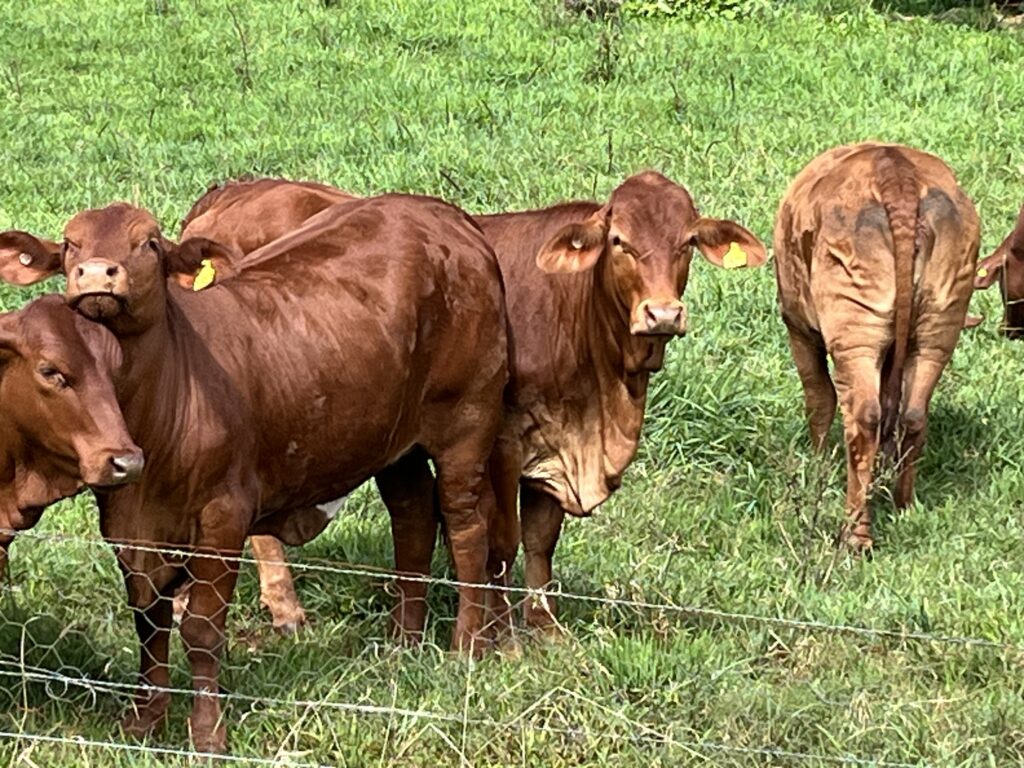
However, my intrigue leads me to try new products, especially given cost of fertilisers. On my own operation, breeding bulls on the Atherton Tablelands, I utilise a combination of approaches. This includes:
There are, what I consider, many ‘snake oil’ biological products on the market, particularly ‘P-solubilising’ products with low evidence. There are some field proven products also for effectiveness. ‘Field proven’ being replicated, randomised high quality trials comparing fertiliser alone with fertiliser and the biological product and the biological product alone.
However, my intrigue leads me to try new products, especially given cost of fertilisers. On my own operation, breeding bulls on the Atherton Tablelands, I utilise a combination of approaches. This includes:
- Applied biology – rhizobium, Azobacter (a free-living nitrogen fixer), and Bacillus subtilis;
- Incorporating legumes, and soil ameliorants to obtain high weight gains;
- On the red basalt soils of the Tablelands the use of lime to correct pH is important;
- As the soils have high iron, and a high PBI (Phosphorus buffer index), P-solubilising bacteria – Bacillus subtilis – offers promise;
- Nitrogen fixing bacteria and endophytic Trichoderma to improve growth and vigour of grasses, root development and disease resistance. This has not been quantified by way of replicated trial work, but by way of paddock comparison looks to offer promise visually;
- Molasses to stimulate soil biology through protozoa;
- Catalyst micronutrient inputs (that spark better growth and utilisation of macronutrients) such as silicon molybdenum and zinc.
5. Increase biodiversity
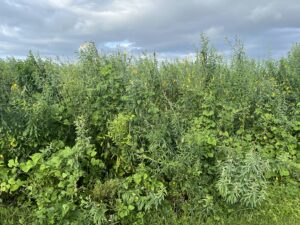
This principle is shared by all the versions of regenerative and conservation Ag. This may be through maximising the number of desirable grass and legume species, intercropping cash crops, high-diversity cover crops or crop rotations. Nature is more collaborative than competitive. This improves energy flow from sunlight, improving the water cycle and soil health will lead to an increase in biodiversity, soil carbon and ecosystem services.
6. Integrate livestock and match the Stocking Rate to Carrying Capacity to optimize production.
Gabe Brown’s last principle is “animal impact.” In all versions of regenerative agriculture, this is crucial to making regenerative agriculture work, and the main way to get the animal impact is through grazing. Grazing livestock add diversity to the products produced on the farm,
adds value to cover crops, and recycles nutrients through manure. Grazing of plants stimulates the plants to pump more carbon into the soil, which again drives nutrient cycling by feeding biology. By cycling more carbon out of the atmosphere and putting it into the ground, we can actively mitigate climate volatility. It goes without saying that pollinators, predator insects, earthworms and soil microbiology are incremental to any system.
Most native pastures will remain in good condition when no more than 30% of the summer growth is eaten. Low utilisation appears to 'waste' feed but allows the grasses to remain vigorous and to seed. Higher rates of utilisation may seem more profitable in the short term but will degrade any native pasture—perennial species are eaten out, bare soil increases and weeds (herbaceous and woody) invade.
The ideal stocking rate matches stock numbers to available feed each year. But because pastures may take two or more years to recover from a one-year drought it is safest to base long-term stocking rates on the rainfall received in 8 years out of 10 rather than the ‘average’ expected in 5 years out of 10 (Spies and Partridge 2006).
adds value to cover crops, and recycles nutrients through manure. Grazing of plants stimulates the plants to pump more carbon into the soil, which again drives nutrient cycling by feeding biology. By cycling more carbon out of the atmosphere and putting it into the ground, we can actively mitigate climate volatility. It goes without saying that pollinators, predator insects, earthworms and soil microbiology are incremental to any system.
Most native pastures will remain in good condition when no more than 30% of the summer growth is eaten. Low utilisation appears to 'waste' feed but allows the grasses to remain vigorous and to seed. Higher rates of utilisation may seem more profitable in the short term but will degrade any native pasture—perennial species are eaten out, bare soil increases and weeds (herbaceous and woody) invade.
The ideal stocking rate matches stock numbers to available feed each year. But because pastures may take two or more years to recover from a one-year drought it is safest to base long-term stocking rates on the rainfall received in 8 years out of 10 rather than the ‘average’ expected in 5 years out of 10 (Spies and Partridge 2006).
References
Bell R.W., Dell B. 2008, Micronutrients in sustainable food, feed, fibre and bioenergy production. (International Fertiliser Association: Paris)
O’Donoghue T, Minasny B & McBratney A 2022, ‘Regenerative Agriculture and Its Potential to Improve Farmscape Function’, Sustainability, vol. 14, no. 10, p. 5815.
Peck G 2018, Phosphorus deficient in brigalow soils. Incitec Pivot Article dated 27.08.2018 https://www.nutrientadvantage.com.au/about/latest-news/phosphorus-deficient-in-brigalow-soils
Spies, P.R. and Partridge, I. (March 2006) Managing for drought in grazing lands NRM Factsheet QNRM01112
O’Donoghue T, Minasny B & McBratney A 2022, ‘Regenerative Agriculture and Its Potential to Improve Farmscape Function’, Sustainability, vol. 14, no. 10, p. 5815.
Peck G 2018, Phosphorus deficient in brigalow soils. Incitec Pivot Article dated 27.08.2018 https://www.nutrientadvantage.com.au/about/latest-news/phosphorus-deficient-in-brigalow-soils
Spies, P.R. and Partridge, I. (March 2006) Managing for drought in grazing lands NRM Factsheet QNRM01112