NACS, May 2025
A 10% improvement in the yield of a 5,000 hectare Pongamia plantation could be worth around $4 million. A number of improvements identified by NACS trials, funded by Japanese oil and gas corporation, Inpex, in Northern Australia could provide a 10 % improvement in the production of oil for biofuels. Collectively this information could result in 20, 30 or 40 % better profit worth 8, 12 or $16 million.
Prior to this research it was thought that Pongamia tolerates adverse soils and climate events and could be planted almost anywhere in Queensland. It does grow almost anywhere, but does not necessarily produce a lot of seed. This information could avoid a costly blunder in the choice of a site for a Pongamia project. Other potential benefits from the research have been a better understanding of the Pongamia tree and further corroboration of economic and technical questions about Pongamia growing.
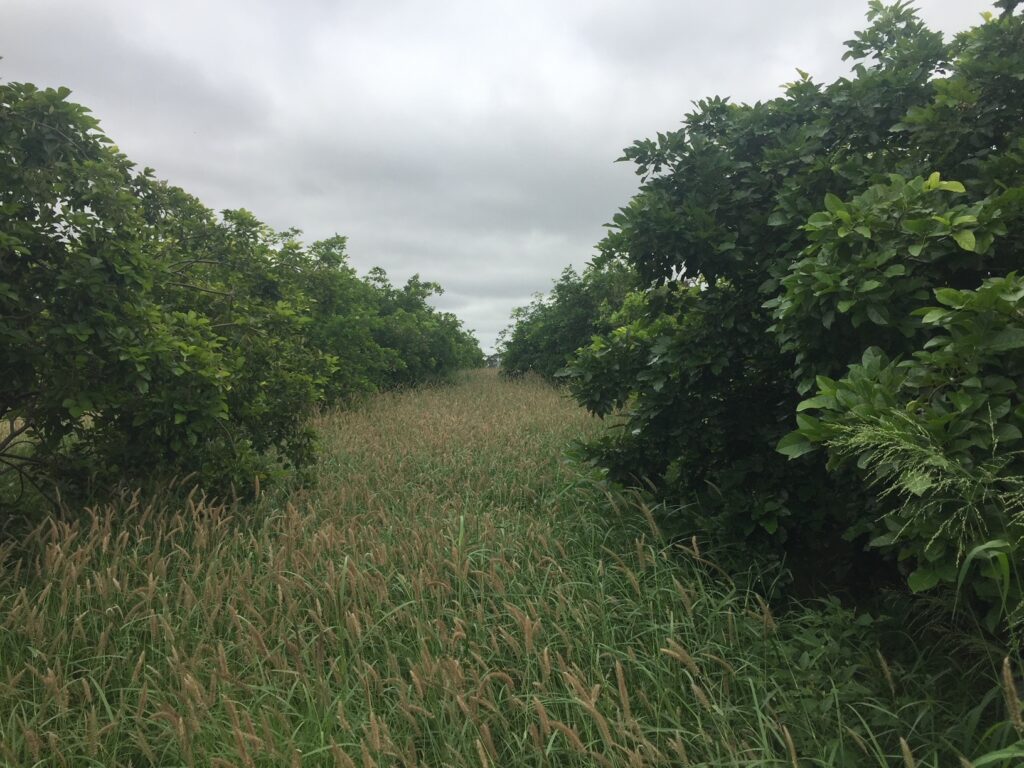
The trials are on Pongamia trees planted some 10 to 15 years ago at Labelle Station, Northern Territory, Walkamin and Mutchilba west of Cairns and South Johnstone south of Cairns.
Despite production being quite variable, the information gained has been valuable.
Benefits of Research – Information to grow better yields of Pongamia
The yield of Pongamia in trials in Queensland has varied from zero to 27kg/tree, this latter amount equivalent to a seed yield of 16.2t/ha. This yield distribution is similar to trees harvested at Kununurra in the north of Western Australia where the top 20 %produced 20.5 kg of seed/ha in 2009 (Arpiwi 2014) . The best tree at Mutchilba in the trials, which yielded 12.36 t/ha.
These results and other observations from Southern Queensland demonstrate it is possible to achieve a commercial yield of 9 t/ha. This yield provides a significant margin for production problems, such as those discussed in this report. A better understanding of these problems and variability in yield will increase the chance of a commercial project achieving 9 tonnes of seed/ha and possibly allow it to move up towards the yield potential which is close to 18 t. of seed per hectare.
Cloning is essential
Trees produced from seed are variable in production and it is essential to use planting stock which is cloned from high yielding varieties. Pollination of Pongamia involves almost 100% outcrossing which makes this variability inevitable and as well as the variance in yield, the variation in maturity will make it unharvestable.
Consistent flowering each year
Selection criteria of new varieties must include flowering consistently each year. The yield of Pongamia trees produced from seeds is variable between years and between trees. The early trials using trees from seed, not only have considerable variation in yield, they vary in flowering time, height and response to soils and climate.
It is possible that trees that flower each year may have a better hormone balance and have less fluctuations in the switch on vegetative growth or flowering. These trees may also have less tendency to abort flowers and pods.
Pongamia yield model
Pongamia trees that have been propagated by seed have shown variable flowering and that the percentage of flowers being converted into seeds can be quite low. Some plants flower and set seed every year, others every two years and some produce flowers on an ad hoc basis. The yield of Pongamia isases, the plant sheds flowers and young pods, bringing down the yield. It is expected that this will be minimised in plants which provide good yields each year.
The trials conducted in North Queensland have enabled an understanding of the components of yield and what is needed to reach a commercial yield target.
Shedding flowers
The Pongamia tree can shed a large number of flowers, and still yield well, if 25% of flowers produce fruit. This appears similar to some other tropical fruit trees, such as Avocado and Mangos, which shed flowers and fruit to lighten the load. Pongamia trees may shed flowers due to extreme stress, such as heavy rainfall or waterlogging, or there may be a hormonal balance problem whereby vegetative growth is favoured instead of seed production.
Rain at flowering
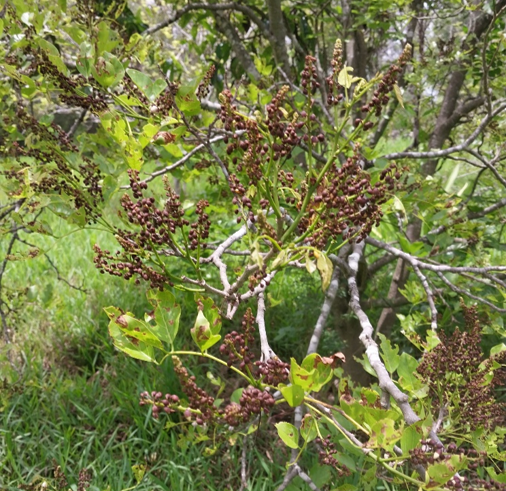
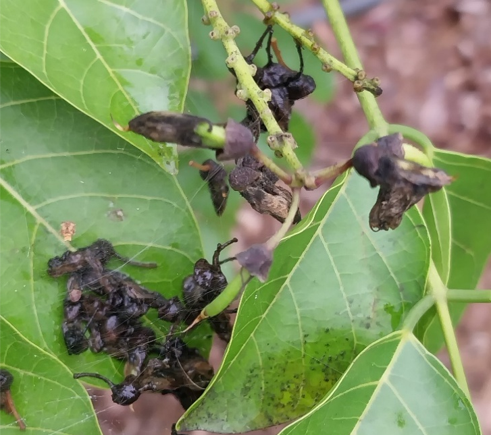
The loss of flowers of the trees shown in figure was almost complete with continuous daily rainfall over a long period with some heavy falls. Light rain does not seem to affect pollination. The Pongamia flower structure appears to protect the pollen from rain until the flower opens. Rainfall was excessive in 2023, including a cyclone in November which produced 600mm of rainfall. It may have reduced yields in the trials.
Figure: Flowers aborted due to lack of pollination
Avoiding high rainfall areas
Rain in large quantities can turn off the switch to flower or cause the abortion of flowers. At the South Johnstone research station, in the high rainfall part of the northern Queensland, flowering was almost non-existent in 2023- 4 and has been poor in most years since planting. Seasonal rainfall in the summer of 2023-4 was in excess of 4 metres. It would appear that Pongamia is more successful in lower rainfall areas and too much rain reduces flowering and yield.
Observations suggest avoiding areas where the rainfall is in excess of 1,500mm. Irrigation is considered desirable if the average rainfall is below 900 mm.
Waterlogging
Pongamia trees will tolerate large amounts of water but seed yields are likely to be affected where there is poor drainage. At Walkamin, the soils are duplex (sand over clay) and waterlogging occurs where the clay layer in duplex soils holds up the percolating water and keeps the sand layer wet. This occurred for most of the 2023-4 summer at Walkamin. Extra drainage works may be needed on clay soils and duplex soils to improve Pongamia yields in wet years.
Drought and pre flowering irrigation
Two of the sites were very dry until the heavy rain in late November. This may have affected yields. Irrigation caused trees to flower several weeks earlier than those in drought. Increased flowering will improve the yield in the following year. It will also assist harvest by avoiding an overlap with flowering.
Shedding of pods
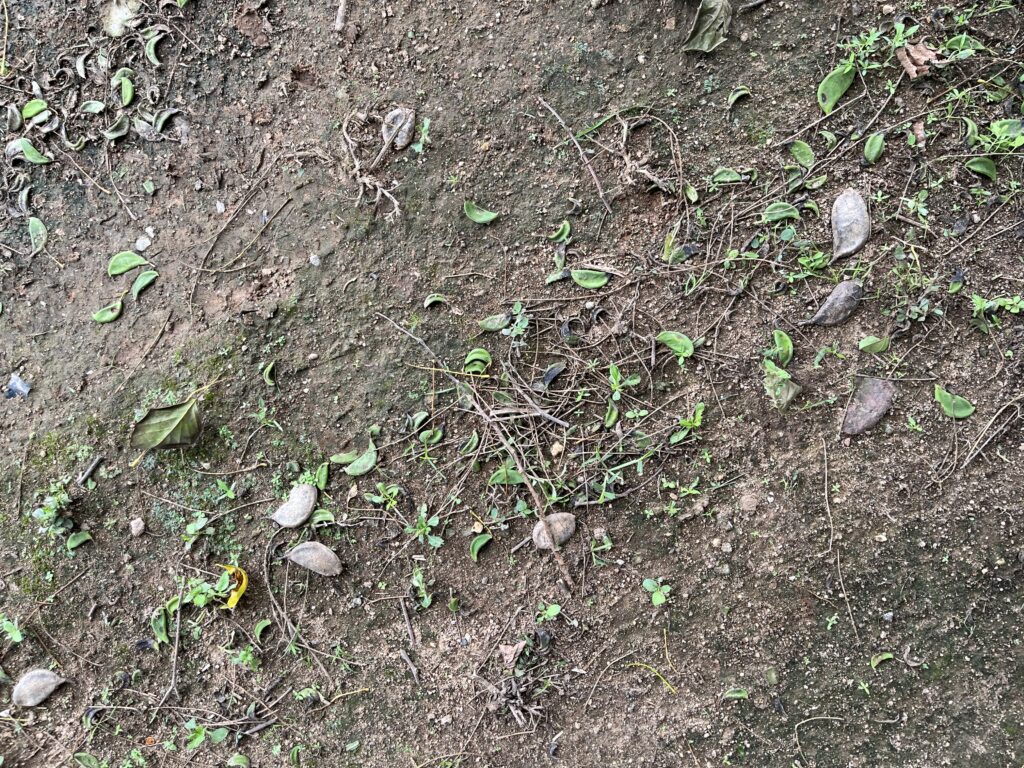
The Pongamia tree can shed pods while they are very small. The photo shows small green pods on the ground in mid-February. At this site (Mutchilba near Mareeba), there was no significant weather problems or insect damage.
Shedding of small pods a month after flowering. A possible reason is that the fruit load was too high for the trees to want to fill them and numbers are reduced. Further study is needed on the causes of flower and pod shedding and whether good management of fertilisers and irrigation can help to increase pod numbers and yields. Sheding pods does not just an occur in the far North. Two out of five trees in a park in Brisbane were observed to shed green pods in mid-February 2025.
Fertilisers should be applied after flowering
In the Walkamin trial, there was a noticeable response to fertilisers in the growth of leaves and stems (wood). This appeared to be at the expense of flowering. Evidence of this was noted in the Walkamin trial where the fertilised trees had grown almost a metre in 5 months but did not have any flowers.
It suggests that fertiliser should be put on Pongamia trees after flowering and in moderate amounts. In the Walkamin and Mutchilba trials, some of the best flowering occurred on smaller trees which looked deficient in nutrients. It is possible that producing a good yield each year may keep the size of the tree
Plant hormones
It appears that the balance of plant hormones controls flowering. A plant growth regulator, paclobutrazol has been shown to promote flowering and fruiting of avocados and mangos. Paclobutrazol has been used on mangos and avocados in the Northern Territory, where it also encourages early harvesting and keeps the tree to a more manageable size. There was no effect when Paclobutrazol was used on Pongamia at Kununurra by Apiwi, but its effects are likely to be variable between years and further trials are warranted.
Stress may promote flowering
It has been suggested that Pongamia needs stress to flower well, but there is no research to back this up. Indian reports suggest Pongamia needs the stress of a dry season to flower well, but in the far North of Australia, the dry season seems to be too long a period without rain. Unthrifty trees suffer and appear more susceptible to borers and termites. At one part of the site around 20% of trees have died. It was observed in the trials that some of the trees which looked unthrifty had the best flower number but a lot of these flowers were shed in the first few weeks.
Soil constraints can affect Pongamia
The idea that Pongamia tolerates most soil constraints has been found to be incorrect. Not all soils are well suited to Pongamia. At Walkamin, the soils are prone to waterlogging. At Coolum, some soils have a pH of around 4 and waterlogging occurs on a regular basis. Trees survive these conditions but do not appear to seed well. Comparisons of trees in the flooded areas show differences in growth of between 6 metres for wet areas and 10 metres in height on better drained areas, after 14 years.
After significant rain in early January 2024, most of the trees at Coolum turned yellow but this went away after two to four weeks. This may be due to chemical changes in the soil which is described as acid-sulphate (or close to it) which has some distinctive chemical changes in response to changes in the aeration of the soil.
Extra bees required for pollination
Flowering has been observed to be good in many instances, but a large percentage of the flowers do not turn into pods.
Bees have been shown to be important for successful pollination. Bee numbers appeared to be low at some sites with only 5-10 bees per flowering tree at the peak pollination time of 9 to 12 am. Bees are considered plentiful where there are 50 to 100 bees per flowering tree. Fifty would seem appropriate if there were 10,000 flowers open on a day of flowering.
Pollination success
Flowers on Pongamia trees are usually prolific, but the success rate of pollination and pod development can be low resulting in a low yield. If we can understand these processes better it will help to manage them and improve the final result. The research is helping to improve this understanding.
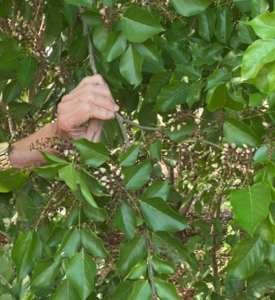
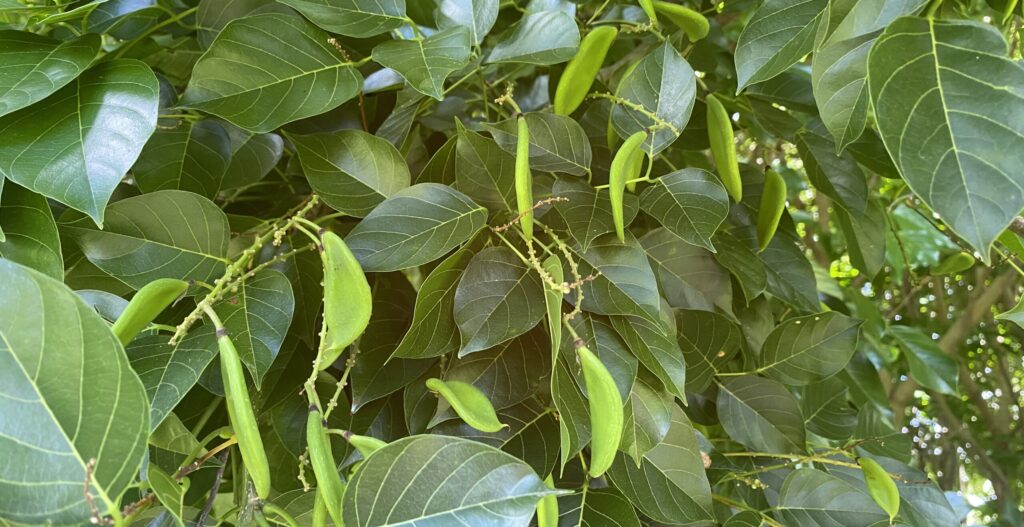
Factors affecting pollination include proximity to other trees which can outcross, insects to pollinate the flowers and severe weather events. Pongamia appears resilient to high temperatures, although bee activity is restricted at more than 40 degrees C. Rain does not always affect pollination. The flower structure of Pongamia appears to protect the pollen from rain. The flowering of the trees shown opposite was still successful after almost daily rain. A good understanding of the sensitive process of pollination may help to reduce variability and improve Pongamia yields.